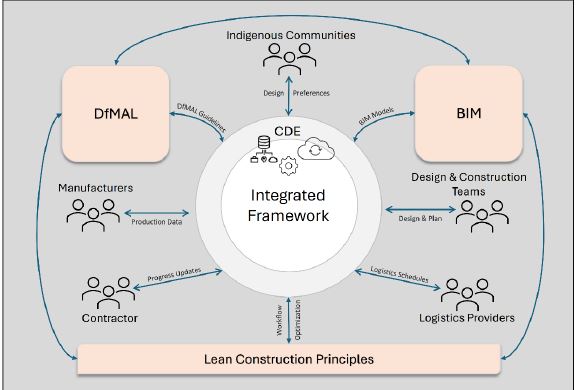
This research generates a novel interdisciplinary framework bridging critical gaps in construction theory by integrating Design for Manufacture, Assembly, and Logistics (DfMAL), Lean principles, and Building Information Modeling (BIM) with active social engagement. Theoretically, the study expands existing DfMAL literature by developing Arctic-specific guidelines for components, addressing challenges like extreme climates and logistical barriers. It advances Lean Construction by demonstrating efficacy in remote environments, optimizing workflows, and minimizing waste. Furthermore, it contributes to BIM research by moving beyond technical coordination to incorporate cultural and community elements into design processes.
Practically, the framework enhances construction efficiency by streamlining operations and improving project timelines. Utilizing a Common Data Environment (CDE) facilitates seamless collaboration, aligning stakeholders to reduce errors across the design and assembly stages. Tailored DfMAL principles support sustainable housing in harsh environments. Finally, this research promotes knowledge transfer via participatory workshops, equipping local communities with advanced construction and project management skills.
This research introduces an interdisciplinary framework integrating DfMAL, Lean principles, and BIM with social engagement to transform Arctic construction. Theoretically, it expands DfMAL and Lean methodologies for extreme climates while incorporating cultural elements into BIM. Practically, the framework improves efficiency and project timelines through a Common Data Environment, reducing waste and errors. Societally, it fosters community empowerment and Indigenous-led design, addressing housing shortages and creating local economic opportunities. Environmental sustainability is prioritized through resource optimization and climate-resilient designs capable of withstanding permafrost thaw. The framework will be validated through pilot projects like the NetZero Arctic Building System, ensuring scalability to other remote regions. By overcoming technological resistance through participatory workshops, this study aligns with global Sustainable Development Goals (9, 11, 13). Ultimately, it establishes new industry standards, providing a scalable global model for sustainable, culturally aligned critical infrastructure in extreme environments while promoting community resilience and integral long-term environmental stewardship.