Niveau : M.Sc.A.

Bidirectional Digital Twin Framework for Smart Building Operations Using BIM–IoT Integration

Abstract

This research develops a bidirectional Digital Twin framework for smart building operations by integrating BIM models, IoT sensor data, and artificial intelligence. The study focuses on enabling real-time synchronization between physical building systems and their digital representations, allowing both monitoring and active control of assets such as HVAC, lighting, and environmental comfort systems. Using Building F at ÉTS Montréal as a case study, the research proposes a scalable architecture that connects BIM models with live building management systems (BMS) through structured data integration pipelines. The framework incorporates data analytics and machine learning models to optimize energy performance and operational efficiency. The project also differentiates between Digital Models, Digital Shadows, and fully interactive Digital Twins to clarify maturity levels. The expected outcome is a validated prototype demonstrating real-time visualization, predictive insights, and closed-loop control capabilities, contributing to both academic research and practical building management applications.

Résultats du projet

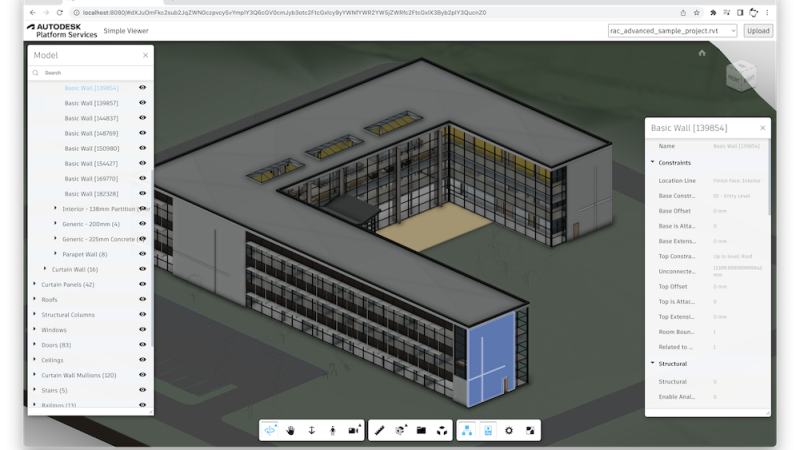
The expected result is a functional bidirectional Digital Twin prototype implemented for a real academic building. The system will establish structured data pipelines connecting BIM models (architectural and electromechanical) with live IoT sensor streams and BMS platforms. A middleware layer will enable semantic mapping between physical devices and BIM elements, ensuring interoperability and traceability. The research will demonstrate: 1. Real-time visualization of environmental and operational parameters within a BIM-based 3D environment. 2. A classification framework distinguishing Digital Model, Digital Shadow, and Digital Twin maturity levels. 3. AI-driven predictive models for HVAC optimization and anomaly detection. 4. A closed-loop mechanism allowing control commands from the digital interface back to physical systems. Performance will be evaluated based on latency, data consistency, scalability, and energy efficiency improvements. The framework aims to provide a reusable architecture adaptable to other buildings. The final deliverable will include a validated architectural model, integration methodology, and performance evaluation demonstrating measurable operational improvements and improved decision support capabilities for facility managers.

Équipe de recherche

L’équipe chargée de ce projet :

Équipe

L’équipe chargée de ce projet

Partenaires

Ce projet a été supporté par :

Recherches similaires

Explorez plus en profondeur notre recherche en explorant ces études et ressources connexes :

Scroll to Top