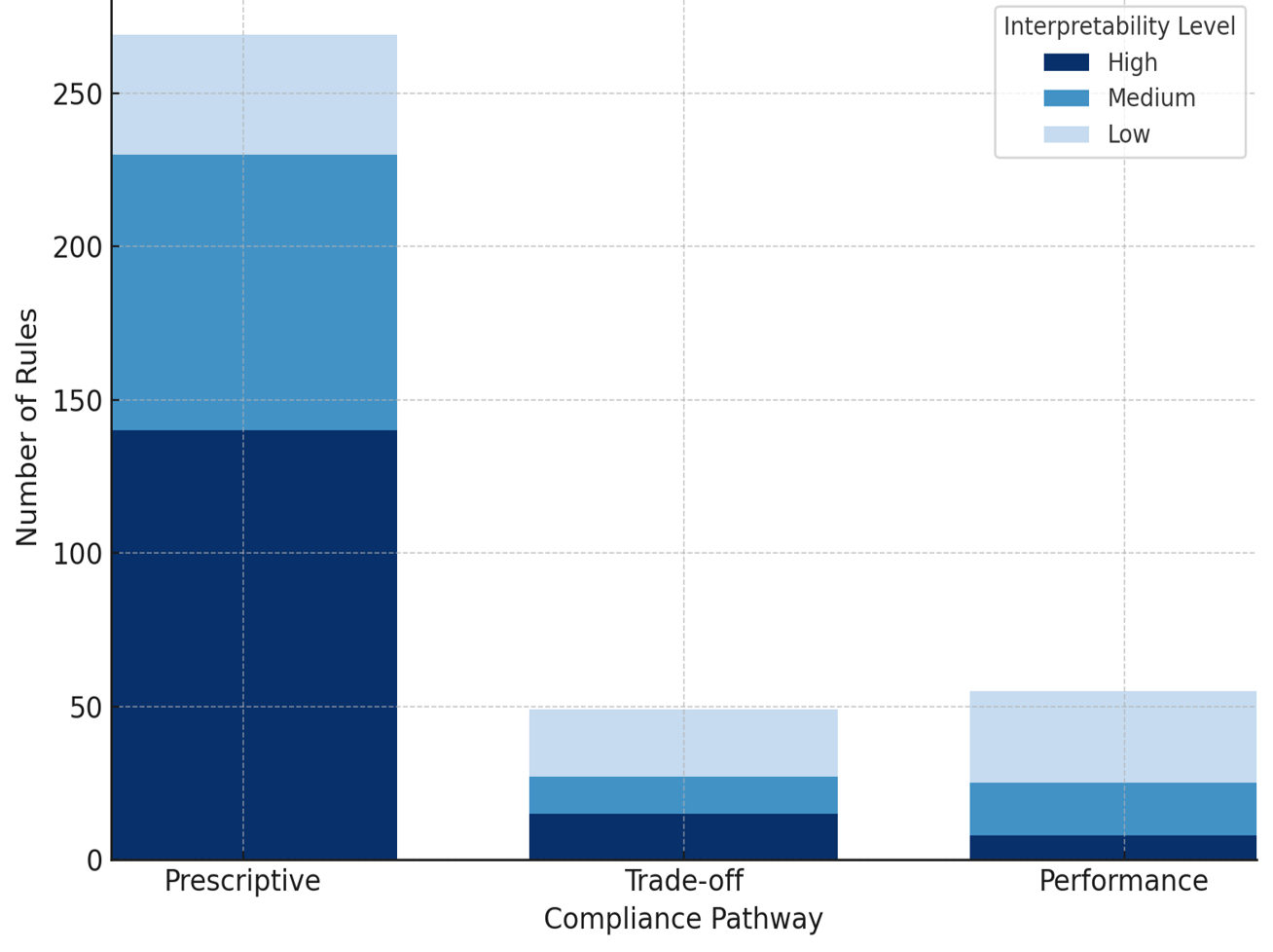
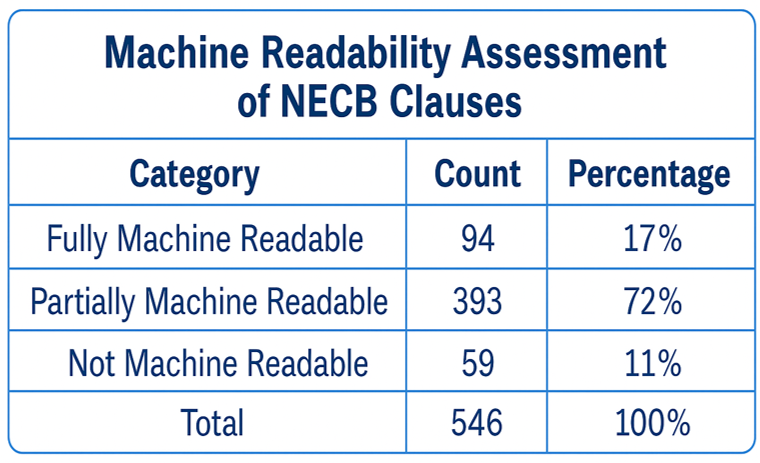
This research is expected to demonstrate that BIM significantly enhances the automation, accuracy, and efficiency of compliance verification with the NECB. By structuring NECB provisions into machine-readable formats and integrating them within BIM workflows, the study shows that regulatory validation can be partially automated across prescriptive, trade-off, and performance-based pathways.
The results highlight improved consistency in rule-checking, reduced reliance on manual verification, and greater transparency in compliance assessment. A practical case study illustrates the feasibility of automating specific NECB requirements within a BIM environment.
However, the findings also identify limitations related to rule interpretability, data interoperability, and the current constraints of IFC standards. Overall, the research contributes to bridging regulatory frameworks and digital design processes, supporting the transition toward more efficient and digitally integrated energy compliance practices in the construction industry.
This research contributes to both academic knowledge and industry practice by advancing the integration of BIM with regulatory compliance processes. Academically, it proposes a structured framework for transforming NECB provisions into machine-readable formats and evaluating their automation potential through IFC-based workflows. The study expands understanding of how digital tools can support automated code compliance checking across different energy compliance pathways.
From an industry perspective, the research demonstrates how BIM can reduce manual verification efforts, improve compliance accuracy, and increase transparency in energy code assessment. By validating the approach through a practical case study, the study provides a scalable methodology that supports digital transformation in construction and promotes more efficient energy compliance practices.